
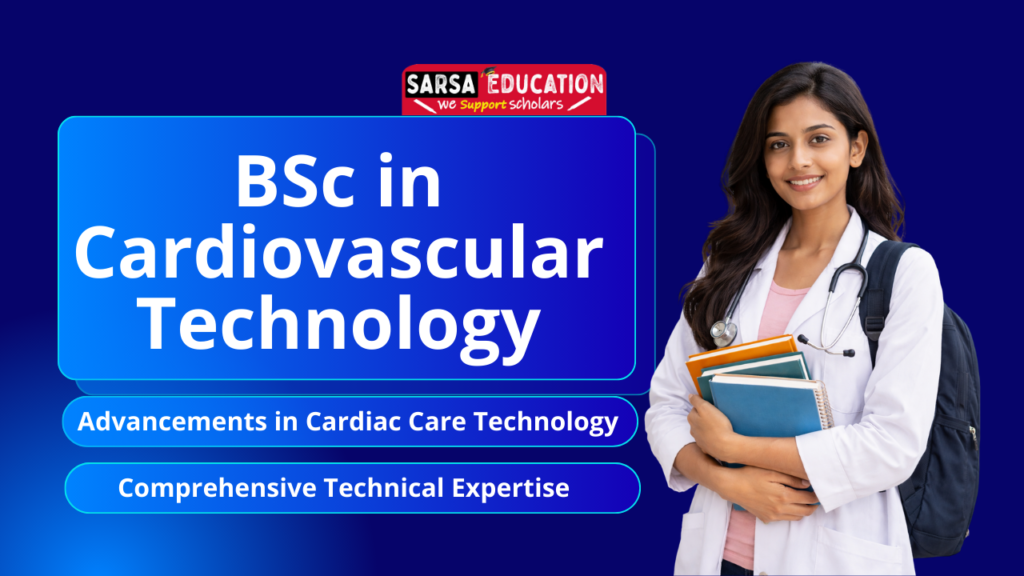
The BSc in Cardiovascular Technology is a comprehensive four-year undergraduate program, including a one-year internship, designed to prepare students as skilled professionals in the diagnosis and treatment of cardiovascular diseases. The course combines academic rigor, technical expertise, and hands-on clinical training to ensure graduates are industry-ready. With the increasing incidence of heart-related disorders worldwide, cardiovascular technologists play a vital role in assisting cardiologists and cardiac surgeons in delivering accurate and effective patient care across hospitals and specialized cardiac centers.
The program provides detailed knowledge of the heart chambers, valves, arteries, veins, and blood vessels, along with their functions in maintaining proper blood circulation and oxygen supply throughout the body. Students study core subjects such as Human Anatomy, Physiology, Pathology, Biochemistry, Hematology, Blood Banking, Electrocardiography (ECG), and Echocardiography. These subjects build a strong scientific foundation and help students understand various cardiovascular diseases, their symptoms, diagnostic methods, and treatment approaches. Admission to the course requires completion of Class 12 or equivalent from a recognized board with at least 50% aggregate marks, preferably with a science background.
Students receive intensive training in both invasive and non-invasive cardiovascular procedures. They learn to perform and assist with cardiac stress tests, electrocardiograms, echocardiography, cardiac catheterization procedures, and vascular assessments. The program also covers advanced therapeutic interventions such as stent implantation, pacemaker insertion, and defibrillator management, along with patient preparation and monitoring during open-heart surgeries. Through supervised clinical postings, students gain real-time experience in handling sophisticated diagnostic equipment, interpreting data, and ensuring patient safety during complex procedures.
Often referred to as the “Rhythm of Heartbeats in the High-Tech Health Arena,” Cardiovascular Technology—also known as cardiac sonography—is a rapidly expanding and technology-driven healthcare field. Cardiovascular technologists, also called cardiac sonographers or technicians, are essential members of multidisciplinary healthcare teams. They work closely with physicians in cardiac care units, catheterization laboratories, and diagnostic centers to support accurate diagnosis and effective treatment planning. This program is ideal for students who aspire to pursue a dynamic and rewarding career in healthcare, contribute to saving lives, and actively participate in the management and prevention of cardiovascular diseases.
Contents
- Objectives – BSc in Cardiovascular Technology
- Eligibility Criteria for B.Sc. Cardiovascular Technology (CVT)
- Documents Required for BSc in Cardiovascular Technology Admission
- Admission Process
- BSc Cardiovascular Technology Course Highlights
- Scope of BSc in Cardiovascular Technology
- Important Links:
- Career Opportunities After BSc in Cardiovascular Technology
- Frequently Asked Questions – BSc in Cardiovascular Technology
Objectives – BSc in Cardiovascular Technology
• Prestigious Allied Health Program – B.Sc. Cardiovascular Technology is a respected and popular course focused on the diagnosis and treatment of heart and vascular diseases.
• Growing Demand in Healthcare – With increasing cases of heart diseases due to lifestyle, genetics, and environmental factors, the need for skilled cardiovascular technologists is continuously rising.
• Essential Support to Cardiologists – Cardiologists and cardiac surgeons rely heavily on cardiovascular technologists to assist in complex diagnostic and interventional procedures.
• Rising Awareness of Congenital Heart Diseases – Increased awareness about heart conditions present from birth has strengthened the importance of specialized cardiac professionals.
• Advancements in Cardiac Care Technology – Rapid developments in modern diagnostic machines, interventional techniques, and affordable treatment methods have expanded career scope in this field.
• Comprehensive Technical Expertise – Students gain proficiency in Electrocardiography (ECG), Echocardiography, Treadmill/Stress Testing, Doppler Ultrasonography, and Contrast Echo procedures.
• Strong Clinical Training – The program trains students to monitor cardiac parameters, assist in catheterization laboratories (Cath labs), and support life-saving cardiac procedures.
• Hands-on Internship Experience – Extensive clinical internship enables students to assist and independently perform simple and complex interventional procedures with confidence.
• Professional Readiness – Graduates are prepared to work in tertiary care hospitals, cardiac care units, diagnostic laboratories, and specialized heart centers.
• Leadership and Communication Skills – The course develops teamwork abilities, leadership qualities, and effective communication skills for interdisciplinary healthcare environments.
• Contribution to Society – Graduates promote cardiac health awareness and provide accurate health information, contributing to improved community healthcare outcomes.
• Global Career Opportunities – The program offers pathways to international education, research exposure, and employment opportunities in advanced healthcare systems worldwide.
Eligibility Criteria for B.Sc. Cardiovascular Technology (CVT)
Program Name: B.Sc. Cardiovascular Technology (CVT)
Course Duration: 3 Years Academic Study + 1Year Mandatory Internship
- Academic Qualification
- Candidates must have completed Class 12 (10+2) / Plus Two (+2) or equivalent from a recognized board.
- Physics, Chemistry, and Biology (PCB) are mandatory subjects in higher secondary education.
- A minimum of 50% aggregate marks in the qualifying examination is generally required (may vary as per institutional norms).
- Relaxation in minimum marks will be provided to reserved categories according to government regulations.
- Age Criteria
- Applicants must be minimum 17 years and maximum 21 years of age as on December 31st of the admission year.
- Admission Process
- Admission to the program is based on the AEEL Entrance Examination (Academy of Excellence Entrance Examination).
- Some institutions will also consider merit in 12thstandard (PCB marks) as per their admission policy.
- Medical & Additional Requirements
- Submission of a Medical Fitness Certificate certified by a Government Medical Officer is mandatory.
- Candidates should possess basic communication skills, scientific aptitude, and a genuine interest in healthcare and cardiac sciences.
Documents Required for BSc in Cardiovascular Technology Admission
If you are applying for BSc in Cardiovascular Technology, you must submit the following mandatory documents during the admission and verification process. Proper documentation ensures a smooth and successful enrolment.
- Academic Documents for BSc in Cardiovascular Technology
- Class 10 Mark Sheet & Certificate – Required as proof of date of birth and academic qualification.
- Class 12 (10+2) Mark Sheet & Passing Certificate – Must include Physics, Chemistry, and Biology (PCB) as compulsory subjects.
- Entrance Exam Scorecard (if applicable) – Required for institutions where admission to BSc in Cardiovascular Technology is based on an entrance examination (e.g., AEEL Entrance Examination).
- Transfer & Verification Documents
- Transfer Certificate (TC) – Issued by the last attended school or college.
- Migration Certificate – Necessary for students from a different board or university.
- Character Certificate – Provided by the previous institution attended.
- Medical & Identity Documents
- Medical Fitness Certificate – Certified by a Government Medical Officer, confirming that the candidate is medically fit for the course.
- Valid Government ID Proof – Such as Aadhaar Card, Passport, or Voter ID for identity verification.
- Passport-Size Photographs – Recent colored photographs as per institutional guidelines.

Admission Process
There is no common national-level entrance exam specifically for BSc in Cardiovascular Technology in India.
Admission to this course is usually done through:
• University-level entrance exams conducted by individual institutions.
• Merit-based admission, where selection is based on 12th standard (PCB) marks
Unlike courses such as MBBS (which use NEET), BSc in Cardiovascular Technology does not have a centralized common entrance test across India. Each university or college follows its own admission criteria. In such case we the Sarsa Education is here to help you take direct admission in BSc in Cardiovascular Technology and make you a good player in the field of heart operations.
BSc Cardiovascular Technology Course Highlights
| Course Level | Undergraduate |
| Full form | Bachelor of Science in Cardiovascular Technology |
| Duration | 3 years + 1year compulsory internship |
| Eligibility | 10+2 or equivalent with minimum 50% marks in Biology, Chemistry, and Physics |
| Examination type | Annual |
| Admission process | Merit/ Entrance-Based |
| Job Positions | Cardiovascular Technician, Cardiovascular Technologist, Echocardiographer, Medical Sonographer, Registered Cardiac Sonographer, Registered Cardiovascular Invasive Specialist, Registered Cardiac Electrophysiology Specialist, Registered Vascular Specialist, Cath Lab Technician. |

Scope of BSc in Cardiovascular Technology
The BSc in Cardiovascular Technology offers a wide range of career opportunities in the rapidly growing field of cardiac healthcare. With heart-related diseases increasing globally, the demand for skilled cardiovascular technologists continues to rise across healthcare systems.
Career Opportunities After BSc in Cardiovascular Technology
• Hospitals and Clinical Cardiology Departments – Graduates of BSc in Cardiovascular Technology commonly work as Cardiovascular Technologists, assisting cardiologists in performing and interpreting advanced cardiac diagnostic and interventional procedures.
• Diagnostic and Imaging Centers – Specialized facilities recruit experts in Echocardiography, Stress Testing, Vascular Sonography, and Cardiac Imaging, making this one of the strongest career pathways.
• Laboratory and Technical Roles – Career options include working as a Lab Technologist or Laboratory Technician, handling cardiovascular diagnostic equipment and investigations.
• Medical Equipment and Technology Companies – A degree in BSc in Cardiovascular Technology opens opportunities in firms that develop and distribute cardiac diagnostic machines, where graduates will work as trainers, sales specialists, or technical experts.
• Health Organizations and Private Clinics – Graduates can also work in private cardiac clinics, healthcare organizations, and specialty heart centers.
Higher Studies After BSc in Cardiovascular Technology
• MSc in Cardiovascular Technology – Provides advanced specialization in areas such as echocardiography, vascular ultrasound, and cardiac electrophysiology.
• MS in Cardiothoracic Surgery (Allied Fields) – Suitable for those seeking advanced clinical exposure in cardiac sciences.
• MBA or PGDM in Healthcare Management – Ideal for graduates interested in hospital administration and healthcare leadership roles.
• Certification Programs (RCIS, RCS) – Certifications like Registered Cardiovascular Invasive Specialist (RCIS) and Registered Cardiac Sonographer (RCS) enhance professional recognition and employability.
• Diploma and Short-Term Courses – Programs such as a Medical Assistant Diploma help strengthen clinical qualifications.
Research, Teaching & Global Scope
• Research and Development (R&D) – Graduates can join research institutes, universities, and biotech companies, contributing to innovative cardiac therapies and technologies.
• Academic and Teaching Roles – With higher qualifications, professionals can become lecturers or instructors in allied health science institutions.
• Internships and Practical Training – Many institutes provide internship opportunities, improving hands-on skills and job readiness.
Important Links:
University of Georgia Exclusive MBBS Ranking Admissions 2025
MBBS in Bulgaria :Eligibility, Affordable Fees,Admissions 2025
MBBS Scholarship: Top scholarships for Medical Students[Win upto Rs 1 lakh]
Dr APJ Abdul Kalam Scholarship 2025 for Medical Students/Engineering Students
Career Opportunities After BSc in Cardiovascular Technology
A BSc in Cardiovascular Technology opens diverse career pathways in clinical healthcare, research, education, and the medical device industry. Graduates can work in India or abroad and may also pursue higher studies or research in advanced cardiac sciences.
- Clinical Roles (Hospitals, Clinics & Cardiac Centers)
- Cardiovascular Technologist – Assists cardiologists in diagnosing and treating heart and blood vessel conditions; works in cardiac labs and hospitals.Cardiac Sonographer / Echocardiography Technician – Performs ultrasound imaging (2D Echo, Doppler studies) to assess heart structure and blood flow.Electrocardiography (ECG) Technician – Conducts ECG tests to monitor heart rhythm and electrical activity in ICUs and emergency units.Cardiac Catheterization Lab Technologist – Supports angioplasty, stent placement, and pacemaker implantation in Cath labs.Cardiopulmonary Technician – Assists in heart-lung function tests and cardiac resuscitation procedures in critical care settings.Treadmill Test (TMT) Technician – Performs cardiac stress tests to evaluate heart performance under exertion.
- Cardiac Rehabilitation Specialist – Supports patients in post-surgery cardiac recovery and rehabilitation programs.
- Research & Development Roles
- Medical Research Assistant (Cardiology) – Participates in clinical trials and cardiovascular device research in hospitals and pharmaceutical companies.
- Biomedical Equipment Technician (Cardiac Devices) – Maintains and manages ECG machines, pacemakers, defibrillators, and echocardiography systems.
- Healthcare Administration & Education
- Cardiac Care Unit (CCU) Manager – Oversees operations in cardiac intensive care units and Cath labs.
- Medical Educator / Trainer (Cardiovascular Technology) – Trains students in cardiac diagnostics and catheterization procedures at medical and paramedical institutes.
- Medical Device & Healthcare Industry
- Medical Device Sales Specialist – Works with companies manufacturing pacemakers, stents, catheters, balloons, and cardiac diagnostic equipment.
- Healthcare Consultant (Cardiology Services) – Advises on cardiac center setup, technology integration, and advanced heart care solutions.

Frequently Asked Questions – BSc in Cardiovascular Technology
1. What is BSc in Cardiovascular Technology?
BSc in Cardiovascular Technology is a four-year undergraduate allied health science program (3 years academic study + 1-year internship). It trains students to assist cardiologists in diagnosing and treating heart and blood vessel diseases using advanced diagnostic and interventional equipment.
2. What is the duration of BSc in Cardiovascular Technology?
The course duration is 3 years of academic study plus 1 year of mandatory clinical internship, making it a total of 4 years. The internship provides real-time hospital training in cardiac care units and catheterization labs.
3. What are the eligibility criteria for BSc in Cardiovascular Technology?
To apply for BSc in Cardiovascular Technology, candidates must:
- Complete 10+2 (PCB – Physics, Chemistry, Biology)
- Score a minimum of 50% aggregate marks (may vary by institution)
- Be at least 17 years of age in the admission year
Some institutions may also require a medical fitness certificate.
4. Is there a common entrance exam for BSc in Cardiovascular Technology?
No, there is no national-level common entrance exam for this course. Admission is usually based on:
- University-level entrance exams.
- Merit-based selection based on 12th PCB marks.
5. What subjects are taught in BSc in Cardiovascular Technology?
Key subjects include:
- Human Anatomy & Physiology
- Pathology & Biochemistry
- Hematology & Blood Banking
- Electrocardiography (ECG)
- Echocardiography
- Cardiac Catheterization Techniques
These subjects build a strong foundation in cardiovascular sciences.
6. What skills are required for BSc in Cardiovascular Technology?
Students should have:
- Strong scientific aptitude
- Good observation and analytical skills
- Interest in healthcare and cardiac sciences
- Effective communication and teamwork abilities
Technical skills are developed during training and internship.
7. What does a cardiovascular technologist do?
A graduate of BSc in Cardiovascular Technology assists cardiologists in performing:
- ECG and stress tests
- Echocardiography and Doppler studies
- Cardiac catheterization procedures
- Monitoring patients during surgeries
They play a crucial role in accurate diagnosis and patient safety.
8. What are the career opportunities after BSc in Cardiovascular Technology?
Graduates can work as:
- Cardiovascular Technologist
- Cardiac Sonographer
- ECG Technician
- Cath Lab Technician
- Cardiac Rehabilitation Specialist
Employment opportunities are available in hospitals, cardiac centers, and diagnostic labs.
9. What is the salary after BSc in Cardiovascular Technology?
Starting salary typically ranges between ₹2.5–4.5 lakhs per annum in India, depending on location and hospital. With experience and certifications, professionals can earn significantly higher salaries, especially in specialized cardiac centers or abroad.
10. Can I pursue higher studies after BSc in Cardiovascular Technology?
Yes. Higher study options include:
- MSc in Cardiovascular Technology
- MBA in Healthcare Management
- International certifications like RCIS or RCS
These enhance career growth and specialization.
11. Is BSc in Cardiovascular Technology a good career choice?
Yes. With increasing heart disease cases globally, the demand for skilled cardiovascular technologists is rising. The course offers stable employment, professional growth, and global opportunities. Additionally, it provides hands-on clinical exposure and opportunities to work with advanced cardiac technologies in reputed hospitals and healthcare institutions.
12. What is the difference between BSc Cardiovascular Technology and BSc Cardiac Technology?
Both courses are similar and focus on heart-related diagnostics and treatment support. However, the exact curriculum and naming may vary depending on the university. In most cases, the core subjects and career outcomes remain almost the same, with minor variations in specialization or training modules.
13. Where can graduates work after completing BSc in Cardiovascular Technology?
Graduates can work in:
- Multi-specialty hospitals
- Cardiac care units (CCU)
- Catheterization laboratories
- Diagnostic imaging centers
- Medical device companies
They may also work internationally with proper certification.
14. Is internship mandatory in BSc in Cardiovascular Technology?
Yes. A one-year compulsory internship is part of the curriculum. It provides hands-on experience in cardiac procedures, equipment handling, and patient monitoring.
15. Does BSc in Cardiovascular Technology have global scope?
Yes. Cardiovascular technologists are in demand worldwide due to the increasing prevalence of heart diseases. With additional certifications and experience, graduates can pursue opportunities in advanced healthcare systems abroad.
16. What is the scope of BSc in Cardiovascular Technology in India?
The scope of BSc in Cardiovascular Technology in India is expanding rapidly due to the increasing number of cardiac hospitals and specialty heart centers. Graduates are in demand in government hospitals, private multi-specialty hospitals, diagnostic labs, and cardiac rehabilitation centers across the country.
17. Is BSc in Cardiovascular Technology a paramedical course?
Yes, BSc in Cardiovascular Technology is a paramedical (allied health science) course. It focuses on supporting cardiologists in diagnostic and interventional cardiac procedures rather than practicing as a medical doctor.
18. Can BSc in Cardiovascular Technology graduates work abroad?
Yes, graduates can work abroad after obtaining required certifications and meeting licensing requirements of the respective country. Additional credentials like RCIS (Registered Cardiovascular Invasive Specialist) or RCS (Registered Cardiac Sonographer) can improve international job prospects.
19. What is the difference between Cardiovascular Technology and Perfusion Technology?
Cardiovascular Technology focuses on diagnostic and catheter-based cardiac procedures, while Perfusion Technology primarily deals with operating the heart-lung machine during open-heart surgeries. Both are specialized allied health fields but differ in roles and responsibilities.
20. Is BSc in Cardiovascular Technology suitable for students who do not want to pursue MBBS?
Yes, BSc in Cardiovascular Technology is an excellent alternative for students interested in cardiac healthcare but not pursuing MBBS. It offers strong clinical exposure, stable career growth, and opportunities to work closely with cardiologists in advanced medical settings.

For National/International Scholarship updates, kindly join our WhatsApp channel
Follow the Sarsa Education channel on WhatsApp: https://whatsapp.com/channel/0029VaL9SgRAjPXJthnK9D0E
For regular Scholarship/Fellowship/Internship updates:
Join our Telegram channel: Sarsa Education
Email: info@sarsaeducation.com