
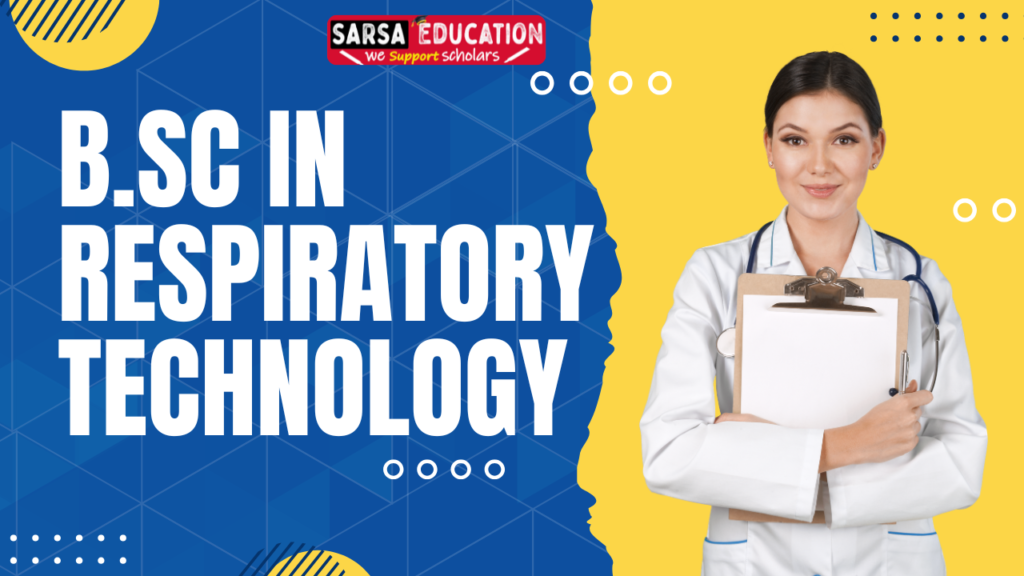
In today’s fast-evolving healthcare industry, specialized professionals are in high demand—and one such rewarding field is B.Sc Respiratory Technology. If you’re passionate about healthcare, patient care, and working with advanced medical equipment, this course can open doors to a stable and impactful career
The Growing Crisis in Respiratory Health — and Why It Matters
Respiratory disease has quietly become one of the most significant public health emergencies of the twenty-first century. Chronic Obstructive Pulmonary Disease (COPD), asthma, pulmonary fibrosis, sleep apnoea, and tuberculosis collectively affect hundreds of millions of people worldwide — and in India, the burden is particularly severe. According to estimates from the Indian Council of Medical Research, over 30 million Indians suffer from asthma alone, while air pollution, occupational hazards, and rising tobacco use continue to push respiratory illness into epidemic territory.
The COVID-19 pandemic of 2020–22 dramatically amplified this crisis. Hospitals scrambled for trained professionals who could operate ventilators, manage oxygen supply chains, conduct pulmonary function tests, and provide critical respiratory care to patients on the brink of survival. The shortage was acute and exposed a long-standing gap in India’s paramedical workforce: there simply were not enough qualified respiratory therapists and technologists.
“Respiratory therapists are the unsung heroes of intensive care — the professionals who literally keep patients breathing when nothing else can.”
— Indian Association of Cardio-Pulmonary Technologists
It is against this backdrop that B.Sc Respiratory Technology has emerged as one of the most strategically relevant and career-forward allied health programmes in India today. A student who chooses B.Sc Respiratory Technology is not simply pursuing a degree — they are positioning themselves at the intersection of critical care medicine, pulmonary diagnostics, and preventive health at precisely the moment when the healthcare system needs them most.
The programme trains graduates to diagnose, treat, and manage patients with cardiopulmonary disorders using sophisticated medical technology. From spirometry and bronchoscopy to mechanical ventilation and sleep studies, the B.Sc Respiratory Technology curriculum gives students both the scientific foundation and hands-on clinical competence to become indispensable members of modern hospital care teams.
Understanding B.Sc Respiratory Technology: Course Structure & Eligibility
B.Sc Respiratory Technology is a full-time undergraduate degree programme offered by universities and medical colleges across India. The programme typically spans three to four years, depending on the institution, and is affiliated with health science universities or deemed universities under the purview of the Medical Council of India and the National Board of Examinations framework.
Eligibility Criteria
To gain admission into a B.Sc Respiratory Technology programme, candidates must meet the following standard eligibility requirements:
- Academic qualification: Completion of Class 12 (10+2) from a recognised board with Physics, Chemistry, and Biology (PCB) as core subjects. Some institutions also accept Physics, Chemistry, and Mathematics (PCM) combinations.
- Minimum marks: Most colleges require a minimum aggregate of 45–50% in the science stream. SC/ST and OBC candidates may be eligible for relaxation as per government norms.
- Age limit: The minimum age is typically 17 years at the time of admission. Some institutions cap the upper age limit at 25–30 years.
- Entrance exams: Admission may be merit-based (Class 12 marks) or entrance-test-based. Some institutions accept NEET scores, while others conduct independent entrance examinations.
Year-by-Year Curriculum Breakdown
The B.Sc Respiratory Technology syllabus is carefully designed to build from foundational science in early years to advanced clinical practice and specialised technology in later years. The following table provides an overview of the semester-wise structure:
| Year | Key Subjects Covered |
| Year 1 Foundation Sciences | Human Anatomy, Physiology, Biochemistry, Fundamentals of Respiratory Care, Introduction to Medical Terminology, Pathology Basics |
| Year 2 Clinical Orientation | Pulmonary Anatomy & Physiology, Microbiology, Pharmacology, Cardiopulmonary Pathology, Oxygen Therapy, Introduction to Pulmonary Function Testing |
| Year 3 Applied Technology | Mechanical Ventilation, Airway Management, Arterial Blood Gas Analysis, Neonatal & Paediatric Respiratory Care, Sleep Medicine, Bronchoscopy Assistance |
| Year 4 Internship / Clinical Practice | Supervised hospital rotations across ICU, Pulmonology OPD, Cardiac Care Unit, NICU, and Emergency Departments. Research project/dissertation. |
Key Skills Developed During B.Sc Respiratory Technology
Beyond subject knowledge, B.Sc Respiratory Technology is above all a skills-based programme. Graduates of this course develop a rich set of both technical and interpersonal competencies:
Core technical skills include spirometry testing, peak flow measurement, arterial blood gas interpretation, bronchodilator response testing, polysomnography (sleep studies), mechanical ventilator management, and CPR/ACLS-level emergency response.
Soft skills cultivated through the programme include critical clinical thinking, patient communication, interdisciplinary teamwork, precision record-keeping, and the ability to remain calm and decisive during medical emergencies — qualities that distinguish an excellent respiratory technologist from a merely competent one.

Career Scope After B.Sc Respiratory Technology
One of the most compelling reasons to pursue B.Sc Respiratory Technology is the breadth and depth of career opportunities available upon graduation. This is not a narrow specialisation — it is a platform that opens doors across hospitals, research institutions, the pharmaceutical industry, government health agencies, and international healthcare systems.
Respiratory Therapist
Work in ICUs and pulmonology wards managing ventilated patients, oxygen therapy, and breathing treatments under physician supervision.
Pulmonary Function Technologist
Conduct spirometry, diffusion capacity, lung volume, and bronchoprovocation tests. Work in diagnostic labs or pulmonology OPDs.
Sleep Technologist
Perform overnight polysomnography studies for the diagnosis and management of sleep apnoea and other sleep-related respiratory disorders.
Neonatal Respiratory Specialist
Provide critical ventilatory support to premature and critically ill newborns in NICUs — a role of immense responsibility and reward.
Clinical Research Associate
Work with pharmaceutical companies or research hospitals on clinical trials for new respiratory drugs, devices, and treatment protocols.
Educator / Academic
After higher study (M.Sc or Ph.D), teach at paramedical colleges or conduct workshops on respiratory care techniques and equipment.
Sectors Where B.Sc Respiratory Technology Graduates Are Employed
The employment landscape for graduates of B.Sc Respiratory Technology spans a wide range of healthcare and adjacent sectors. Each sector offers distinct working environments, growth trajectories, and compensation structures:
- Multi-specialty Hospitals & Corporate Healthcare Chains: Institutions such as AIIMS, Apollo Hospitals, Fortis Healthcare, Manipal Hospitals, and Medanta actively recruit qualified respiratory technologists for their ICU, pulmonology, and critical care departments.
- Government Health Services: Central and state government hospitals, ESI hospitals, and armed forces medical establishments regularly recruit qualified paramedical staff through competitive examinations and direct selection.
- Home Healthcare Agencies: A fast-growing segment driven by an ageing population and post-COVID recovery needs, home healthcare requires respiratory therapists to manage oxygen concentrators, CPAP/BiPAP devices, and portable ventilators for patients in their homes.
- Medical Device & Pharmaceutical Companies: Companies that manufacture or distribute ventilators, spirometers, anaesthesia equipment, and respiratory drugs hire B.Sc Respiratory Technology graduates as clinical application specialists, sales engineers, and product trainers.
- International Opportunities: Respiratory therapists are in high demand in the USA, Canada, the UK, Australia, and the Gulf countries. Indian graduates who pursue additional certification (such as the US-based Registered Respiratory Therapist or RRT credential) can access highly rewarding careers abroad.
“In the post-COVID healthcare landscape, respiratory technologists have transitioned from back-room support staff to front-line critical care heroes.”
— Healthcare Workforce Report, India 2024
Salaries, Growth Trajectory & Higher Education Options
Compensation in the field of respiratory technology is directly tied to experience level, institutional sector (private vs government), geographical location, and the presence of additional certifications. Here is a realistic picture of what B.Sc Respiratory Technology graduates can expect at different stages of their careers:

RoleAnnual Package
Fresher / Junior Respiratory Technologist ₹2.5 – 3.5 LPA
Respiratory Therapist (2–4 years exp.) ₹4 – 6 LPA
Senior / Lead Respiratory Technologist ₹6 – 9 LPA
Department Head / Clinical Educator ₹9 – 14 LPA
International (USA/UK/Gulf) — Post RRT ₹20 – 45+ LPA
It is important to note that salaries in government hospitals, though structured, come with the significant added benefit of job security, pension schemes, and structured pay commission revisions. Private corporate hospitals often offer higher starting salaries but with performance-linked increments.
Higher Education After B.Sc Respiratory Technology
For graduates who wish to advance their academic credentials, specialise further, or move into research and teaching roles, several higher education pathways are available after completing B.Sc Respiratory Technology:
- 1M.Sc Respiratory Technology / Pulmonary Medicine: A two-year postgraduate degree that deepens expertise in advanced ventilator management, pulmonary research, and critical care science. Available at select universities and AIIMS campuses.
- 2MBA in Healthcare Management: For those inclined towards hospital administration and management, an MBA with a healthcare specialisation provides the business acumen to move into leadership and operational roles in the healthcare industry.
- 3Registered Respiratory Therapist (RRT) – USA: Offered by the National Board for Respiratory Care (NBRC) in the United States, the RRT credential is globally recognised and opens the door to high-paying positions in American hospitals and healthcare systems.
- 4Ph.D / Research Programmes: Academically driven graduates can pursue doctoral research in pulmonary physiology, respiratory epidemiology, or medical technology innovation, contributing to the scientific literature and future treatment development.
How to Get Admitted: Top Colleges & Practical Steps
Taking action begins with choosing the right institution. The quality of clinical exposure, faculty expertise, and hospital affiliations will significantly shape your competence as a respiratory technologist. Below is a list of reputed institutions that offer B.Sc Respiratory Technology or closely related B.Sc programmes in Cardio-Pulmonary and Respiratory Care:
- AIIMS (All India Institute of Medical Sciences) — New Delhi, Bhopal, Bhubaneswar, Jodhpur
- Christian Medical College (CMC) — Vellore, Tamil Nadu
- Sri Ramachandra Institute of Higher Education and Research — Chennai
- Manipal College of Allied Health Sciences — Manipal, Karnataka
- Amrita Institute of Medical Sciences & Research — Kochi, Kerala
- SRM Institute of Science and Technology — Chennai, Tamil Nadu
- JIPMER (Jawaharlal Institute of Postgraduate Medical Education & Research) — Puducherry
- Jamia Hamdard University — New Delhi
- King George’s Medical University — Lucknow, Uttar Pradesh
- Rajiv Gandhi University of Health Sciences — Bengaluru, Karnataka
- NSHM Knowledge Campus — Kolkata, West Bengal
Step-by-Step Admission Process
- 1Research institutions early: Begin identifying B.Sc Respiratory Technology colleges in your state and across India at least 6–12 months before the intended admission year. Check for recognition by the National Board of Examinations (NBE) and affiliating health science universities.
- 2Appear for NEET (if applicable): Several top institutions now require or prefer NEET scores as part of the admission process. Prepare for NEET Biology and Chemistry sections with particular rigour.
- 3Submit applications on time: Most institutions open applications between April and July for the academic year beginning in August–October. Keep all Class 10 and 12 documents, identity proof, category certificates, and medical certificates ready.
- 4Attend counselling or merit-based selection: Government-affiliated colleges typically conduct centralised counselling through state health education boards. Private institutions may conduct personal interviews or written tests.
- 5Verify hospital affiliation: Before confirming your seat, verify that the college has a teaching hospital with a functional ICU, pulmonology department, NICU, and sleep lab — direct clinical exposure is the backbone of an excellent B.Sc Respiratory Technology education.
Fee Structure & Scholarships
Annual fees for B.Sc Respiratory Technology vary widely by institution type. Government medical colleges typically charge between ₹15,000 and ₹60,000 per year, whereas private deemed universities may charge between ₹80,000 and ₹2,50,000 per annum. Students from economically weaker sections may be eligible for the National Scholarship Portal schemes, state minority welfare scholarships, or institution-specific fee waivers. Merit-based scholarships are also offered by several private universities to students who demonstrate academic excellence in their Class 12 examinations.
Pro tip: Always verify NAAC accreditation and National Board of Examinations recognition before paying any fees. An unrecognised degree can severely limit your employment and higher-education options later.
Important Links:
- Best Platforms to Find Internships
- PM Internship Scheme : Eligibility, Documents, Amount Apply
- Online MBA with Internship Exclusive Program 2025
- Online Degree Courses Exclusive Admissions 2025
- Government Scholarships
Frequently Asked Questions
Is B.Sc Respiratory Technology a good career choice in India?
Yes, emphatically so. With rising respiratory disease burden, a post-pandemic surge in ICU infrastructure, and a critical shortage of trained professionals, B.Sc Respiratory Technology graduates are in high and growing demand across hospitals, home healthcare agencies, and the medical device industry. The career offers strong job security, meaningful clinical impact, and excellent opportunities for international migration.
What is the difference between a Respiratory Therapist and a Respiratory Technologist?
The terms are often used interchangeably in India. In a strict clinical sense, a respiratory therapist provides hands-on patient care (airway management, ventilator support, breathing treatments), while a respiratory technologist may focus more on diagnostic procedures (pulmonary function testing, sleep studies, blood gas analysis). B.Sc Respiratory Technology programmes train graduates for both roles.
Can I pursue B.Sc Respiratory Technology without NEET?
Several private universities and deemed institutions admit students based on Class 12 merit scores alone, without requiring NEET. However, institutions affiliated to the Medical Council of India or state government health science universities may increasingly require NEET for paramedical admissions. It is best to check the specific admission policy of each college.
What is the scope of B.Sc Respiratory Technology abroad?
The scope is exceptional. Countries like the USA, Canada, the UK, Australia, New Zealand, and the Gulf states have a formal, well-recognised profession of respiratory therapy with dedicated licensing bodies. Indian graduates who obtain an RRT credential (USA) or equivalent can work in internationally accredited hospitals at salaries several times higher than the Indian domestic scale. The credential pathway typically involves additional examination and clinical hours.
Is B.Sc Respiratory Technology equivalent to MBBS?
No. B.Sc Respiratory Technology is an allied health/paramedical degree, not a medical degree. Respiratory technologists work as part of a multidisciplinary healthcare team under the clinical supervision of pulmonologists and critical care physicians. While the role is highly skilled and clinically significant, it is distinct from the independent practice scope of a medical doctor
Conclusion: A Career That Breathes Life Into Medicine
B.Sc Respiratory Technology is not simply a degree programme — it is a vocation that places you at the most critical juncture in human health: the moment when a patient cannot breathe on their own. The combination of scientific depth, clinical skill, and technological proficiency demanded by this profession makes it one of the most intellectually and emotionally rewarding careers in the allied health sciences.
India is at an inflection point. As the country invests billions in healthcare infrastructure, expands its ICU capacity, and builds a world-class public health system, the demand for qualified respiratory technology professionals will only intensify. Students who pursue B.Sc Respiratory Technology today are not just choosing a career — they are choosing to be essential.
Whether you envision yourself managing a ventilated patient in a Mumbai ICU, running a sleep lab in Bengaluru, working with a medical device company in Pune, or practising as a Registered Respiratory Therapist in Toronto — the journey begins with a single, informed decision: to enrol in B.Sc Respiratory Technology and commit to a profession that the world genuinely, urgently needs.
Take the First Step Today!
Connect with Sarsa Education and let us guide you toward a successful future.
For National/International Scholarship updates, kindly join our WhatsApp channel
Follow the Sarsa Education channel on WhatsApp: https://whatsapp.com/channel/0029VaL9SgRAjPXJthnK9D0E
For regular Scholarship/Fellowship/Internship updates:
Join our Telegram channel: Sarsa Education
Email: info@sarsaeducation.com